
Local Attractions at Tui Lodge
Tui Lodge is ideally placed to help you make the most of the unique range of local attractions in Turangi and the Tongariro region. The Central Plateau is unique, spectacular and renowned for the amazing activities on offer, such as:
- World famous fly fishing,
- The Tongariro Alpine Crossing
- Bird watching
- The National Trout Centre
- White water rafting
- River and mountain walks
- Mountain biking
- Tokaanu Thermal pools
to list a few.
This picture perfect part of New Zealand has something for everyone. Information about two of the most popular local attractions in Turangi and the Tongariro region is provided below. More information about the wide range of local attractions is available from:
The Tūrangi Customer and Visitor Information Centre
Ngawaka Place, Tūrangi
Phone: +64 7 386 8999
Freephone: 0800 288 726
Email: [email protected]
Directions and opening hours.
Tui Lodge is the perfect location from which to enjoy this region. Contact us and we can help you plan and organise your perfect holiday.
Fishing

Tui Lodge is 500m from the world famous Tongariro River, noted for winter spawning runs of wild Rainbow trout with an average weight of 2kgs (4.5lb). The Brown trout on average are larger with a few exceeding 10lbs
General
- Wear natural coloured clothing
- Sunscreen is a must when on the water
- Polaroid glasses are a must to protect your eyes and to see the fish that you are trying to catch. They help when wading as you can see into the water easily
- A waterproof jacket
- Hat or cap
- Insect repellent
Check the river level and rainfall on the Genesis Energy website.
Summer Fishing
Back Country fishing is from the 1st October - 30 June. For small streams we use 5-7wt rods. 7-9wt rods are used in and around the lake edges.
Natural pattern flies are the order of the day, size 10, 12, or 14 Stone Fly, Caddis, Pheasant Trail, Prince Nymph, Mayfly, Hare and Coppers and any gold beaded flies.
Dry flies: Royal Wolf, Cicada, Caddis and any of your favourite dries.
Winter Fishing
The main winter spawning runs start early Autumn and finish late Spring but fresh run fish can be caught in our rivers all year round. These are hard fighting Brown and Rainbow trout.
We use 8-9wt rods with weight forward lines and heavy nymphs.
Flies: Rabbits, Red Setter, Woolly Buggers, Doll, and Lumos for night time.
Nymphs: Stone fly, Pheasant Tail, Prince Nymph, Mayfly, Hare and Coppers and any gold beaded flies.
In the winter wear 5-7mm neoprene waders as frosts are common and clear days often follow.
Tongariro Crossing

New Zealand's oldest national park and a dual World Heritage Site, the Tongariro National Park is rich in both cultural identity and dramatic, awe-inspiring scenery.
Unique landforms, including the volcanic peaks of Ngauruhoe, Tongariro and Ruapehu make the Tongariro Alpine Crossing a world-renowned trek. The Crossing is heralded as the best one-day trek in New Zealand, while others say it ranks among the top ten single-day treks in the world.
Many who complete the 19.4km walk will tell you the climbs can be steep and the weather unpredictable, but definitely worth it!
Tui Lodge is an ideal base from which to conquer the Tongariro Alpine Crossing and we can assist with all aspects of your planning.
Ensure transport is arranged to drop you at the beginning of the track and pick you up at the end of the day.
Prepare for the elements. The weather can change quickly and unexpectedly in any alpine environment. At times conditions can be extreme. Be prepared for every type of weather.
Be sure to visit Plan Your Trip which tells you exactly what to take, what to wear and what to expect.
During the winter additional gear like crampons and ice axes are required. Please take care to read Winter Experience if you are planning a winter trip.
Check the MetService website for the weather forecast. Tongariro National Park has a specific forecast.
Local Bird Watching
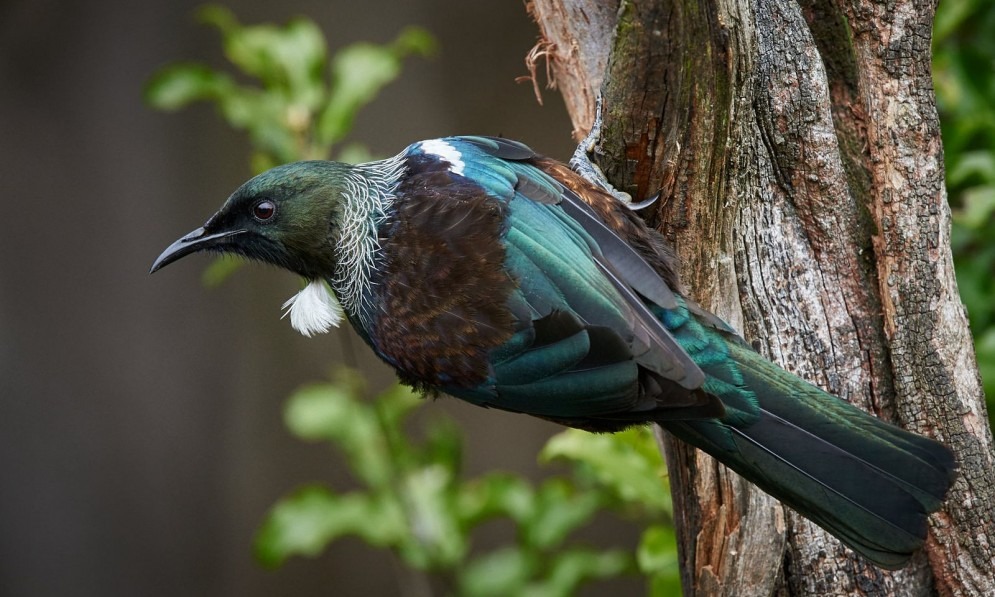
For bird watchers we have many of interest in the Turangi area - well over 50 different species. In our n garden we have Tui, Bell Bird, Native Falcon (Karearea), New Zealand Pigeon (Kereru), plus all the common birds.
Just 200 metres away on the Tongariro River you will find the Blue Duck (Whio).
A short drive to Lake Taupo west of here you may find the allusive Bittern along with a whole host of native and none native water fowl.
Walks in our area
Very close to us is the River Trail, either for biking or walking and a short drive to:
- Lake Rotopaunamu
- Tokaanu Thermal Area
- The Taranaki Falls
- The Tahawai Water Falls
- Pukawa to Omori bush walk
- Urchin Track
- Silican Rapids
Tūī | Tui
Tūī are boisterous, medium-sized, common and widespread bird of forest and suburbia. They look black from a distance, but in good light tūī have a blue, green and bronze iridescent sheen, and distinctive white throat tufts (poi). They are usually very vocal, with a complicated mix of tuneful notes.
Whio | Blue duck

The whio or blue duck is an iconic species of clear fast-flowing rivers, now mostly confined to high altitude segments of rivers in North and South Island mountain regions. Nowhere common, it lives at low densities and its shrill “whio” whistle above the noise of turbulent waters will usher in a long-remembered encounter.
Bellbird | Korimako

Bellbirds are the most widespread and familiar honeyeater in the South Island, and are also common over much of the North Island. Their song is a welcome sound in mainland forests. Although they have a brush-like tongue which is used to reach deeply into flowers to reach nectar, bellbirds also feed on fruits and insects.
New Zealand falcon | Kārearea

The New Zealand falcon is a magpie-sized raptor that feeds predominantly on live prey. Adapted to hunt within the dense New Zealand forests they are also found in more open habitats such as tussocklands and roughly grazed hill country. More recently they have been discovered breeding in exotic pine plantations.
Kererū | New Zealand pigeon

This large and distinctively coloured pigeon is a familiar sight to many New Zealanders. This is because the kererū has a widespread distribution through the country, being present in extensive tracts of native forest, and rural and urban habitats, including most cities. As well as allowing close approach, it often roosts conspicuously, such as on power lines or on the tops of trees. The distinctive sound of its wing beats in flight also draws attention.
Australasian bittern | Matuku-hūrepo

Bitterns are extremely cryptic and rarely seen. This is due to their secretive behaviour, inconspicuous plumage and the inaccessibility of their habitat. Their presence is most commonly discerned through hearing the distinctive ‘booming’ call of the males during the breeding season. Bittern occasionally show themselves in the open along wetland edges, dykes, drains, flooded paddocks or roadsides, often adopting their infamous ‘freeze’ stance, with the bill pointing skyward, even when caught out in the open.
Local Attractions at Tui Lodge
Tui Lodge is ideally placed to help you make the most of the unique range of local attractions in Turangi and the Tongariro region. The Central Plateau is unique, spectacular and renowned for the amazing activities on offer, such as:
- World famous fly fishing,
- The Tongariro Alpine Crossing
- The National Trout Centre
- White water rafting
- River and mountain walks
- Mountain biking
- Tokaanu Thermal pools
to list a few.
This picture perfect part of New Zealand has something for everyone. Information about two of the most popular local attractions in Turangi and the Tongariro region is provided below. More information about the wide range of local attractions is available from:
The Tūrangi Customer and Visitor Information Centre
Ngawaka Place, Tūrangi
Phone: +64 7 386 8999
Freephone: 0800 288 726
Email: [email protected]
Directions and opening hours.
Tui Lodge is the perfect location from which to enjoy this region. Contact us and we can help you plan and organise your perfect holiday.
Fishing
Tui Lodge is 500m from the world famous Tongariro River, noted for winter spawning runs of wild Rainbow trout with an average weight of 2kgs (4.5lb). The Brown trout on average are larger with a few exceeding 10lbs.
Ian is a qualified fly fishing guide and member of the NZ Professional Fishing Guides Association and will help you plan a memorable fishing experience.
General
- Wear natural coloured clothing
- Sunscreen is a must when on the water
- Polaroid glasses are a must to protect your eyes and to see the fish that you are trying to catch. They help when wading as you can see into the water easily
- A waterproof jacket
- Hat or cap
- Insect repellent
Check the river level and rainfall on the Genesis Energy website.
Summer Fishing
Back Country fishing is from the 1st October - 30 June. For small streams we use 5-7wt rods. 7-9wt rods are used in and around the lake edges.
Natural pattern flies are the order of the day, size 10, 12, or 14 Stone Fly, Caddis, Pheasant Trail, Prince Nymph, Mayfly, Hare and Coppers and any gold beaded flies.
Dry flies: Royal Wolf, Cicada, Caddis and any of your favourite dries.
Winter Fishing
The main winter spawning runs start early Autumn and finish late Spring but fresh run fish can be caught in our rivers all year round. These are hard fighting Brown and Rainbow trout.
We use 8-9wt rods with weight forward lines and heavy nymphs.
Flies: Rabbits, Red Setter, Woolly Buggers, Doll, and Lumos for night time.
Nymphs: Stone fly, Pheasant Tail, Prince Nymph, Mayfly, Hare and Coppers and any gold beaded flies.
In the winter wear 5-7mm neoprene waders as frosts are common and clear days often follow.
Tongariro Crossing
New Zealand's oldest national park and a dual World Heritage Site, the Tongariro National Park is rich in both cultural identity and dramatic, awe-inspiring scenery.
Unique landforms, including the volcanic peaks of Ngauruhoe, Tongariro and Ruapehu make the Tongariro Alpine Crossing a world-renowned trek. The Crossing is heralded as the best one-day trek in New Zealand, while others say it ranks among the top ten single-day treks in the world.
Many who complete the 19.4km walk will tell you the climbs can be steep and the weather unpredictable, but definitely worth it!
Tui Lodge is an ideal base from which to conquer the Tongariro Alpine Crossing and we can assist with all aspects of your planning.
Ensure transport is arranged to drop you at the beginning of the track and pick you up at the end of the day.
Prepare for the elements. The weather can change quickly and unexpectedly in any alpine environment. At times conditions can be extreme. Be prepared for every type of weather.
Be sure to visit Plan Your Trip which tells you exactly what to take, what to wear and what to expect.
During the winter additional gear like crampons and ice axes are required. Please take care to read Winter Experience if you are planning a winter trip.
Check the MetService website for the weather forecast. Tongariro National Park has a specific forecast.
Local Bird Watching
For bird watchers we have many of interest in the Turangi area - well over 50 different species.
In our own garden we have Tui, Bell Bird, Native Falcon (Karearea), Native Pigeon (Kereru), plus all the common birds.
Just 200 metres away on the Tongariro River you will find the Whio (Blue Duck).
A short drive to Lake Taupo west of here you may find the allusive Bittern along with a whole host of native and none native water fowl.
Walks in our area
Very close to us is the River Trail, either for biking or walking and a short drive to:
- Lake Rotopaunamu
- Tokaanu Thermal Area
- The Taranaki Falls
- The Tahawai Water Falls
- Pukawa to Omori bush walk
- Urchin Track
- Silican Rapids
Tūī | Tui
Tūī are boisterous, medium-sized, common and widespread bird of forest and suburbia. They look black from a distance, but in good light tūī have a blue, green and bronze iridescent sheen, and distinctive white throat tufts (poi). They are usually very vocal, with a complicated mix of tuneful notes.
Whio | Blue duck
The whio or blue duck is an iconic species of clear fast-flowing rivers, now mostly confined to high altitude segments of rivers in North and South Island mountain regions. Nowhere common, it lives at low densities and its shrill “whio” whistle above the noise of turbulent waters will usher in a long-remembered encounter.
Bellbird | Korimako
Bellbirds are the most widespread and familiar honeyeater in the South Island, and are also common over much of the North Island. Their song is a welcome sound in mainland forests. Although they have a brush-like tongue which is used to reach deeply into flowers to reach nectar, bellbirds also feed on fruits and insects.
New Zealand falcon | Kārearea
The New Zealand falcon is a magpie-sized raptor that feeds predominantly on live prey. Adapted to hunt within the dense New Zealand forests they are also found in more open habitats such as tussocklands and roughly grazed hill country. More recently they have been discovered breeding in exotic pine plantations.
Kererū | New Zealand pigeon
This large and distinctively coloured pigeon is a familiar sight to many New Zealanders. This is because the kererū has a widespread distribution through the country, being present in extensive tracts of native forest, and rural and urban habitats, including most cities. As well as allowing close approach, it often roosts conspicuously, such as on power lines or on the tops of trees. The distinctive sound of its wing beats in flight also draws attention.
Australasian bittern | Matuku-hūrepo
Bitterns are extremely cryptic and rarely seen. This is due to their secretive behaviour, inconspicuous plumage and the inaccessibility of their habitat. Their presence is most commonly discerned through hearing the distinctive ‘booming’ call of the males during the breeding season. Bittern occasionally show themselves in the open along wetland edges, dykes, drains, flooded paddocks or roadsides, often adopting their infamous ‘freeze’ stance, with the bill pointing skyward, even when caught out in the open.
Contact Tui Lodge
Location

